Automotive
An OBD scanner that reads every module and writes to 0 of them, with AI diagnosis
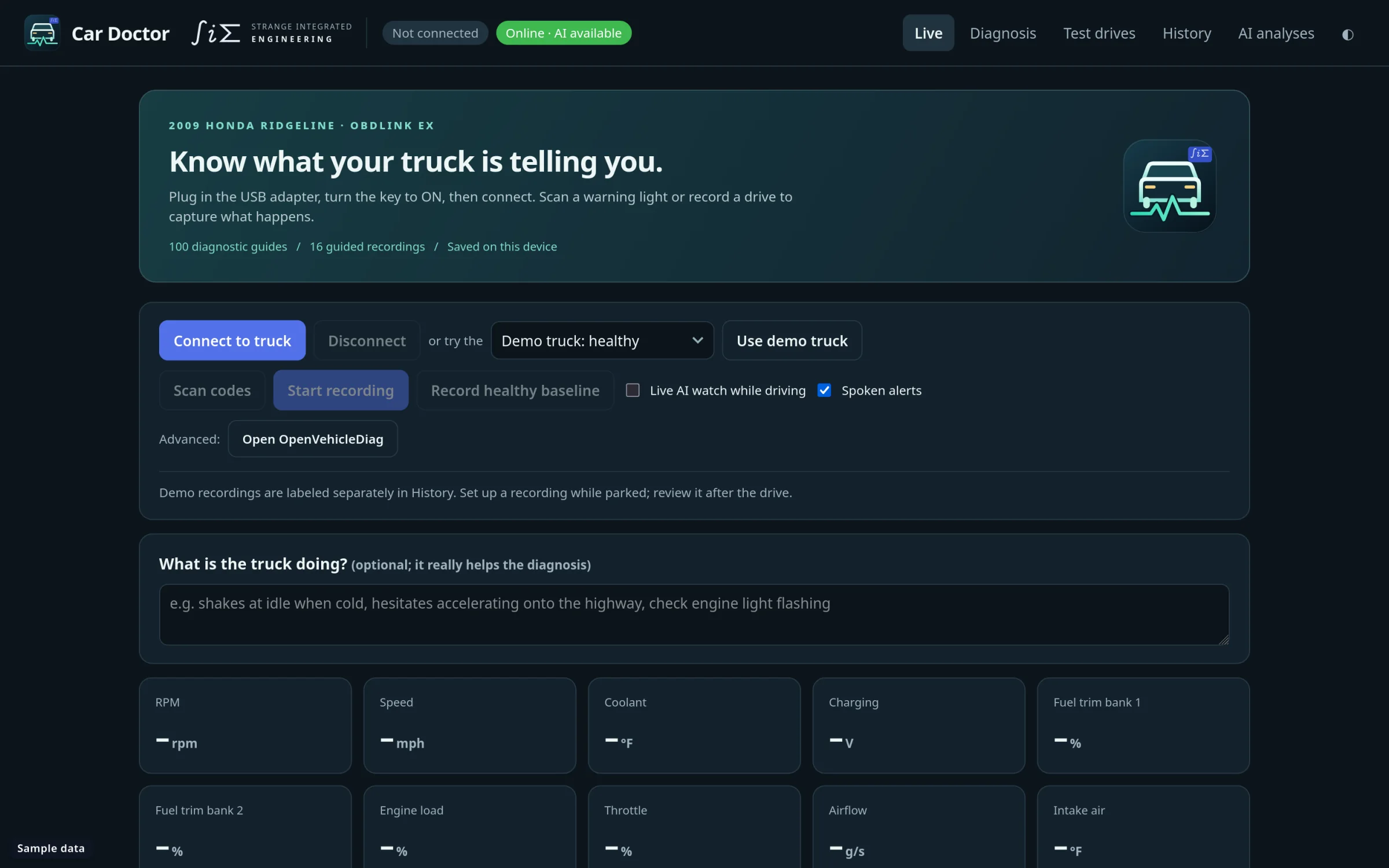
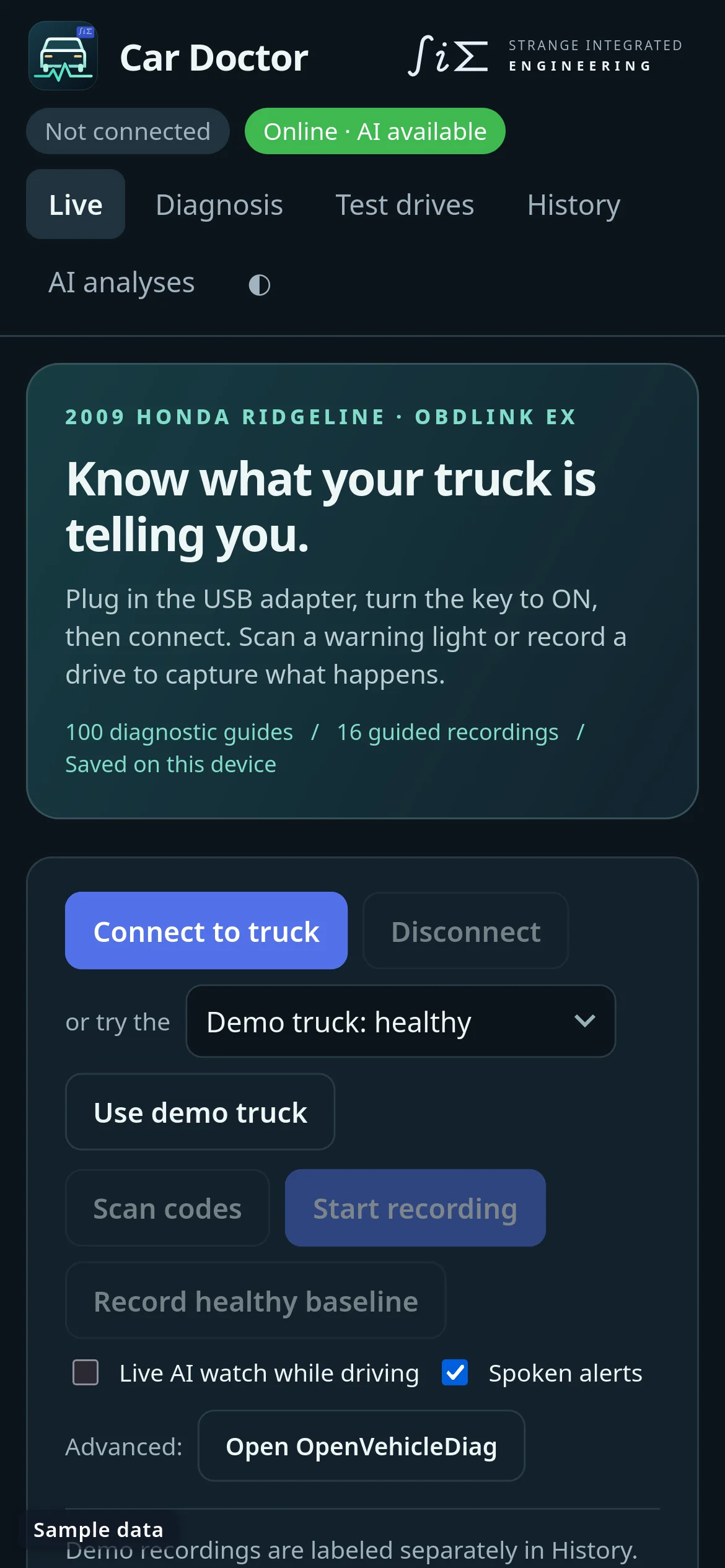
Plug in, scan the standard and maker-specific modules, and get a plain explanation of likely causes and next checks.
01 / Problem
What wasn't working.
Consumer code readers stop at the engine codes. Dealer tools can write to modules, which is a risk in the wrong hands. Most people just want to know what is wrong and what to check next.
02 / Approach
What I built.
- 01
USB OBD adapter on a small local server. Scans 11-bit CAN at 500k and a 29-bit module sweep.
- 02
Every command passes a read-only allow-list. It cannot reflash or write.
- 03
A fault knowledge base, checked by a validator before it is used.
- 04
Claude explains likely causes and the next physical check, in plain language.
03 / Architecture
How the pieces connect.
04 / Result
writes to the vehicle. Read-only by design. A local dashboard that turns a scan into a short list of things to look at. Tested against a simulator; first real truck test is next.
Read-only
Allow-listed commands. No writes, ever.
Module sweep
Goes past engine codes into body and chassis modules.
Plain answers
Likely cause and the next thing to check.
Local dashboard
Runs on a machine next to the adapter, in a browser.
Have a problem like this one?
Book a call